Wild Vanilla Flavor from Spruce Tips: A Foraged, Golden Herbal Syrup
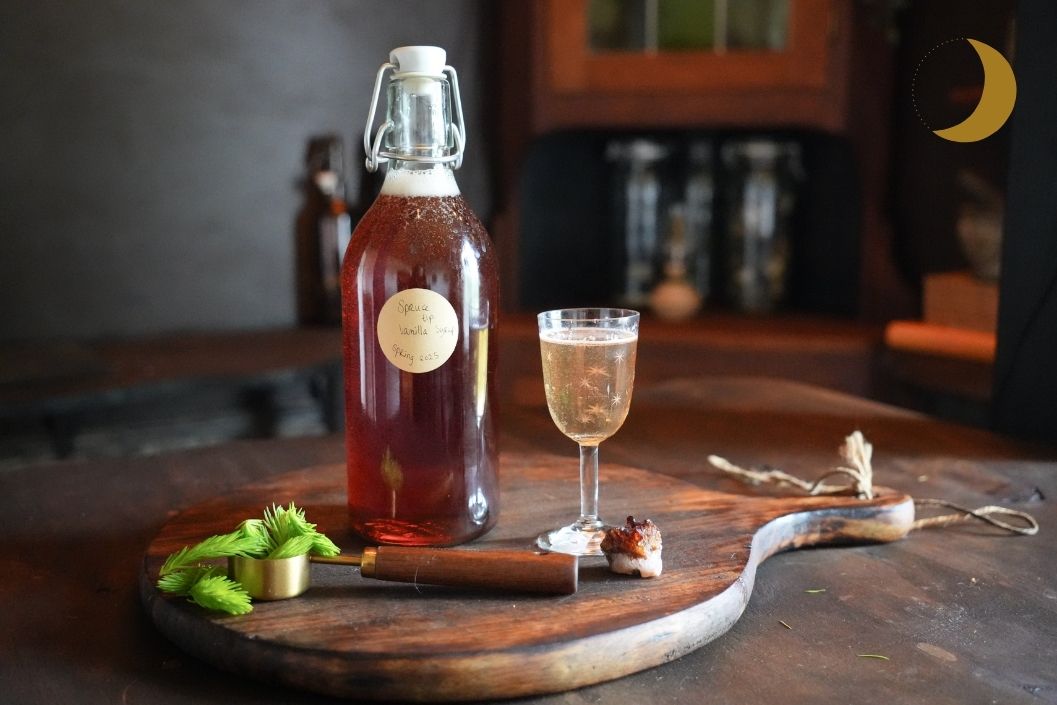
In the world of culinary herbalism, few ingredients capture the transition from spring to summer like spruce tips. These soft, citrusy green shoots are more than just pretty growth. They’re bursting with aroma, plant vitality, and complex flavor. When gently transformed into spruce tip vanilla syrup, something magical happens: the bright forest notes mellow into a surprisingly smooth, vanilla-like essence, unlike any store-bought extract.
Foraging Spruce Tips: Know What to Look For
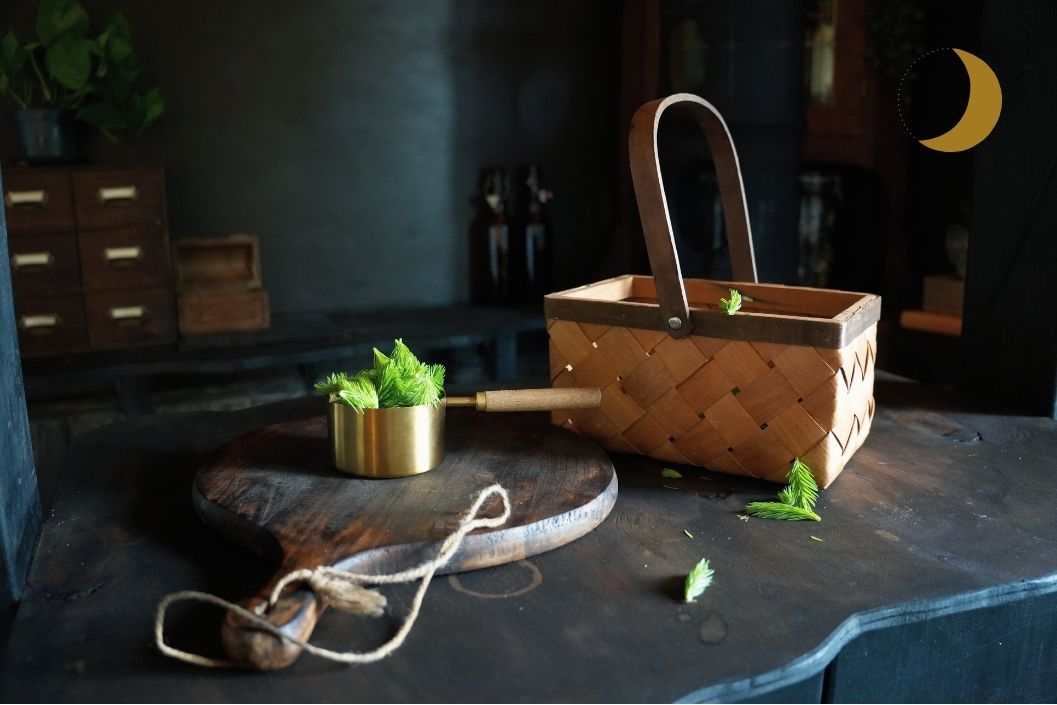
Spruce tips are the young, tender growths at the ends of spruce branches, typically harvested in late spring to early summer. They’re bright green, soft to the touch, and have a lemony-resin scent when crushed.
When foraging, make sure you correctly identify the tree: spruce, not pine or yew (the latter is toxic). Always harvest mindfully and sparingly. Only take a few tips from each tree to support its growth.
Spruce tips are commonly used in syrups, vinegars, pickles, and ferments. However in this recipe, we’re showcasing their sweet side.
Flavor Profile of Raw Spruce Tips
Fresh spruce tips offer a complex and vibrant flavor that forms the base of this syrup. According to my Wild 7 flavor system, the most prominent notes include:
Green – Fresh, plantlike, and bright, like forest air in spring
Tart – A citrusy, slightly sour edge, especially in young tips
Sweet – A gentle natural sweetness, especially when freshly picked
Earthy – Resinous and grounding, hinting at the deeper forest tones beneath the brightness
These flavors shift during the cooking process, creating something far more complex than the sum of its parts.
A Naturally Occurring Vanilla Note
What makes this syrup so intriguing is the vanilla-like flavor that develops naturally during the process, without using vanilla beans.
This transformation happens during heating and sugar caramelization. The terpenes and resins in the spruce tips change when infused and boiled, interacting with the sugar to create soft, warm, woody-sweet aromatic compounds. It doesn’t taste like classic vanilla extract. It’s more subtle, woodsy, and floral with caramel depth. If you’d like to heighten that note, a small splash of real vanilla extract can complement the natural flavors without overpowering them.

Recipe: Wild Spruce Tip Vanilla Syrup
This method preserves both flavor and herbal qualities, using a gentle infusion-based approach with the option for a quicker decoction.
Enough for 1 bottle of 500 ml (+ 1 imidiate serving ;p)
For this you will need:
2 cups of spruce tips
2 cups of water
2 cups of sugar*
*This amount of sugar is only needed if you want to store it for a long time and also want to have the option to store it outside the fridge. If this is not important, just use enough sugar as to your liking. Just know that the syrup will not thicken a lot, it will become more of a light syrup for drinks.
Method 1: Cold Infusion (Recommended for flavor depth)

Add 2 cups of spruce tips and 2 cups of water to a pot.

Bring just to a boil, then remove from heat.
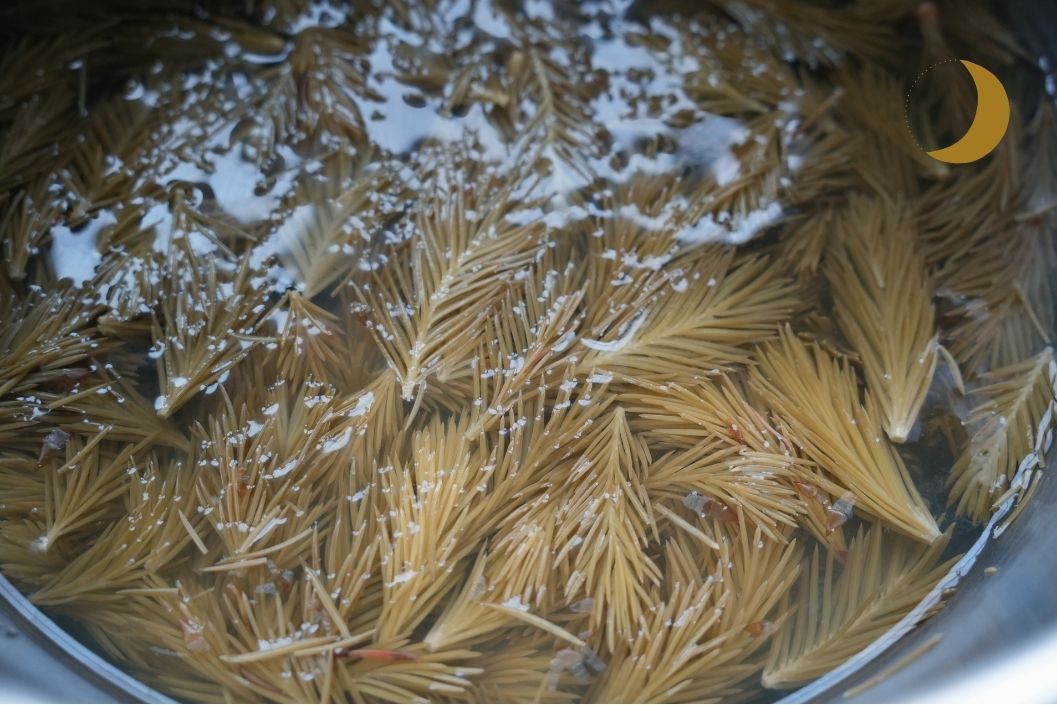
Cover with a lid and let it infuse overnight.
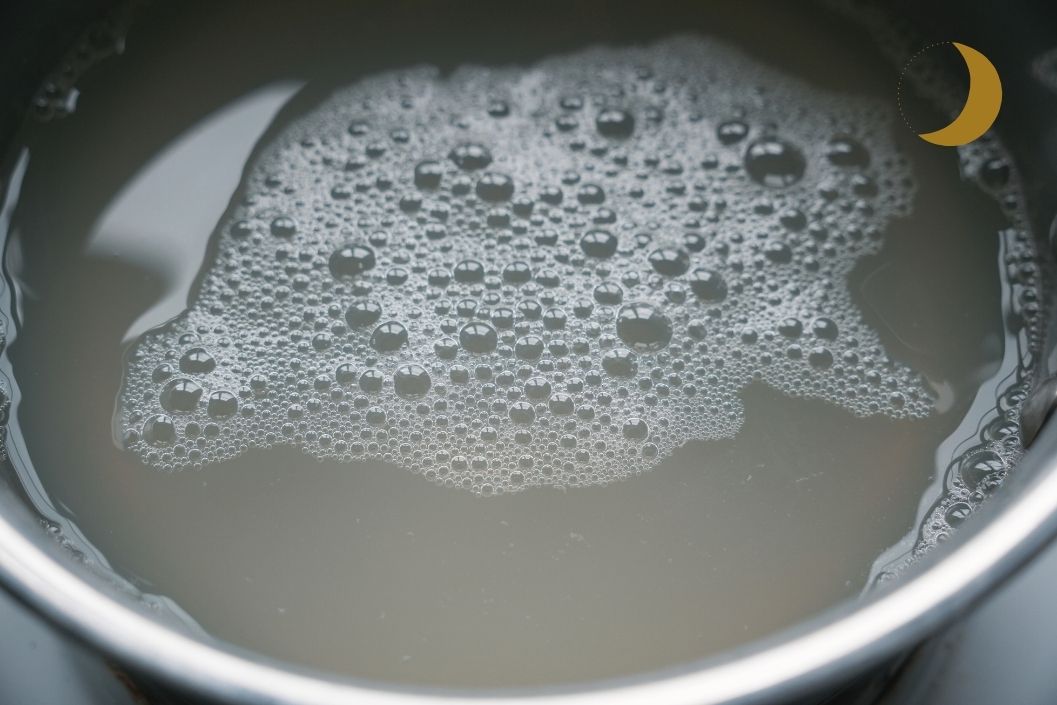
The next day, strain the liquid, discard the tips. (compost!)
Add equal parts sugar, 2 cups.
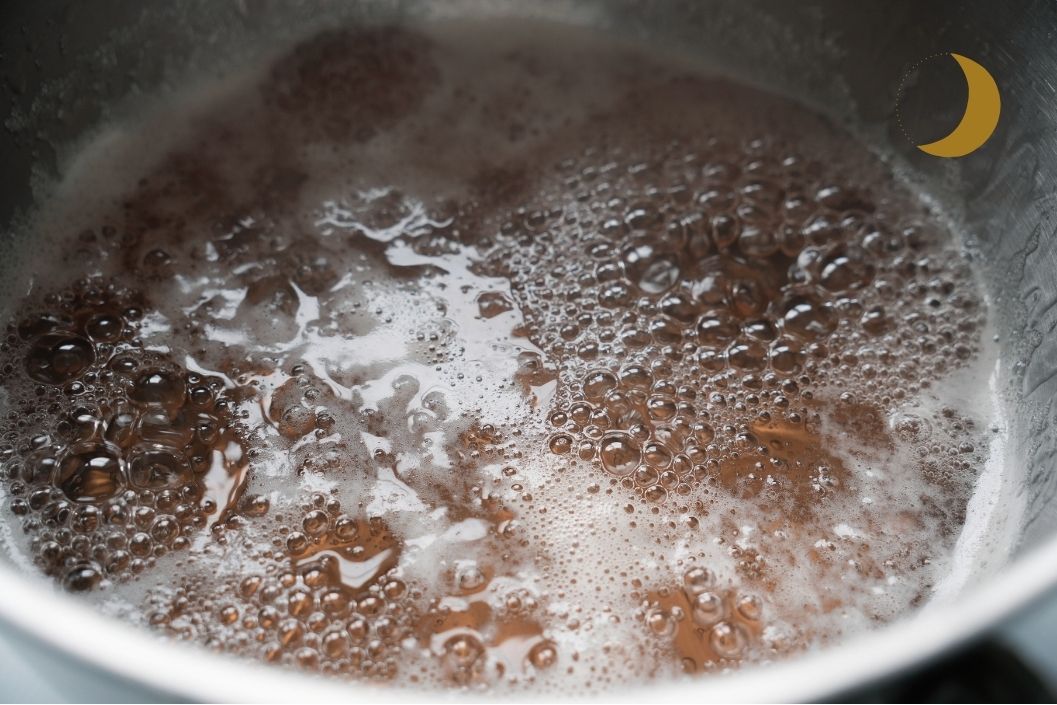
Bring to a gentle boil and simmer until it thickens to your liking. Watch for a golden to amber-brown color.

(Optional) Add a few drops of vanilla extract to enhance the natural notes.
Method 2: Fast Boil Method
Simmer spruce tips in water for 30 minutes instead of infusing overnight.
Strain and proceed with sugar and boil as in steps 5–7 above.
Tip: The longer you simmer the sugar, the deeper the color and flavor. It also makes the syrup thicker.

Storage & Shelf Life
Once cooked and sealed in a clean jar or bottle, this syrup is very shelf-stable and can be kept for many months to a year or more.
Fridge? Optional. If stored in the fridge, it will become very thick, almost spoonable.
If kept at room temperature, it stays pourable and easy to drizzle.
Make sure it’s properly sealed and discard if it ever develops mold or off smells (rare if stored correctly).
How to Use It
This golden forest syrup pairs beautifully with wild and everyday dishes alike. Try it with:
Blueberry mugcakes with yogurt
Fluffy pancakes or waffles
Stirred into sparkling water or tea
As a drizzle over baked apples or roasted nuts
Its light vanilla edge pairs surprisingly well with berries, dairy, and even some aged cheeses. It adds a wild edge to everyday meals.
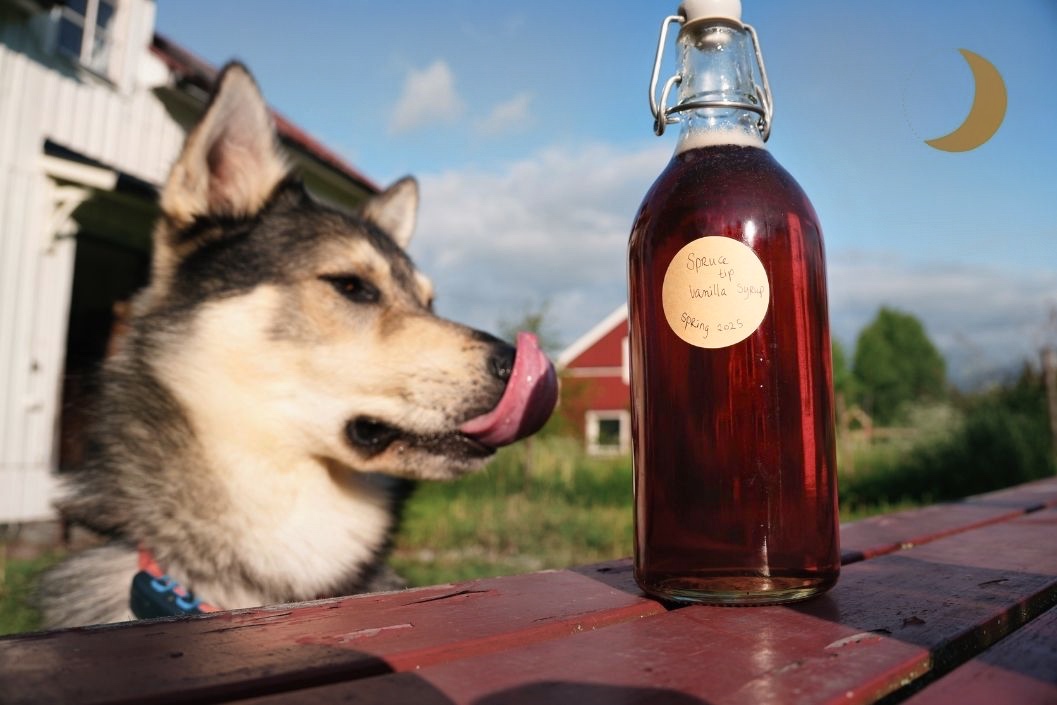
Want to Learn More About Culinary Herbalism?
This syrup is just one example of how seasonal wild ingredients can be transformed with simple kitchen techniques into something truly special. If you're inspired by recipes like this, you’ll love my upcoming culinary herbalism courses, where we explore seasonal foraging, herbal kitchen methods, wild flavor development, and more.